News

By Ragan M. Conteh

The remarkable anniversary marks 10 years of relentless fight to end all forms of harmful traditional practices including gender based violence in the country.

Making her statement on the ceremony, the Chairperson of the Forum Against Harmful Practices (FAHP), Madam Rugiatu Neneh Turay traced back the organization’s history, “I underwent female genital mutilaion (DGM) when I was eleven years and I know how it hurts me because I had to sleep nights and nights of severe pains with no showers. On the third day when it was time to have our first bath, the Soweis examined me and declared that the mutilation was not well performed and that they needed to remove the remaining clitoris that was left with me.”

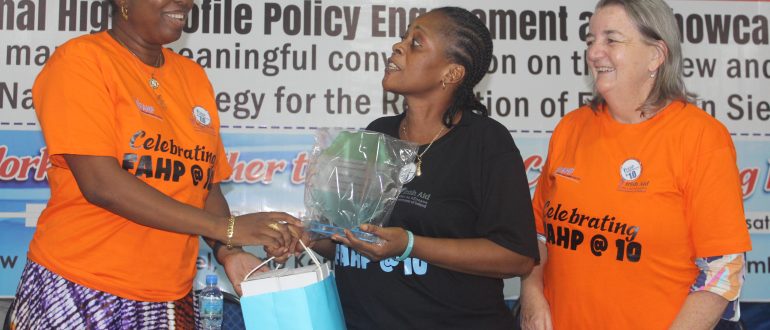
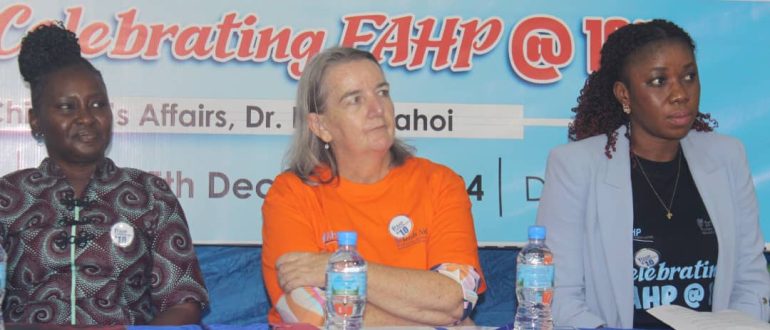
Madam Turay was speaking on Thursday 5th October 2024 during a national high profile policy engagement. The engagement was held at the Brookfields Hotel in Freetown.

Madam Turay continued: after being remutilated, this time around it was not only a physical torture but a psychological torture that left an everlasting scare in her  her memory. She revealed that almost all FAHP members are  survivors who have taken the venture to speak with one voice by ending FGM.

“We have never changed our objectives neither our mission nor vision. From its inception stage,FAHP vision is very clear which is to see Sierra Leone free from FGM,” she said. She stated other organizations had been  seeing FGM as a taboo topic to discuss in public.

The Chairperson said FAHP has made a lot of progress towards building the movement to end female genital mutilation by reaching out to areas where it is practiced.

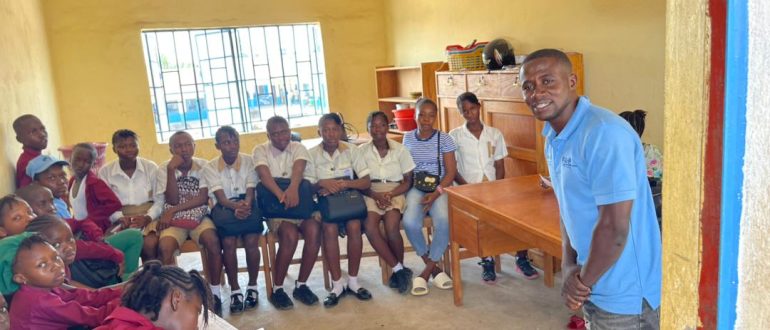
She said in villages they have formed community ambassadors, school clubs of influence, change  makers, (Soweis) clubs, father and man’s club when paramount chief are also members.

Madam Turay stated that slave trade, cannibalism, human sacrifice amongst others were cultural practices that are unacceptable, adding that FGM cannot be an exception.

She stated that FGM violates every right a woman should enjoy and that, she added, other countries in Africa, Europe, Asia and America where FGM is practiced have passed laws to ban it.

“I attended a four days retreat on FGM with other ten countries in Kenya. Most have banned FGM except my country.

“I listened alternatively as each and every participant shared their experiences in the field and how much challenges they faced even with the laws. When it was my turn to speak, the moderator said, can we listen  to Rugiatu Turay from Sierra Leone where there is no law banning FGM but numbers are decreasing. We must learn from her to know what they are doing differently that is making the change and decreasing the numbers in their country,” she said.

Rugiatu stated that her answer was simple, they are following a national strategy that was developed by the Sierra Leone Government which was never approved by the same government.

She revealed that as Anti FGM campaigners mostly survivors believe they have a responsibility first for their people to understand that FGM practice is wrong and dangerous not only to women but for entire community where it is practiced.

She said they have to make sure communities believe that they respect and honor the bondo culture as the only traditional space for women by creating an alternative rite of passage that is comumunity and cultural based.

The alternative rite named Neneh’s strategy is based on indigenous knowledge developed by the Amazonian Initiative Movement (AIM) and if fully accepted and implemented will not only uphold the beauty of Bondo culture but will eliminate the harmful practice and it’s a sustainable solution that will also address climate change, women Iradership and empowerment.

The Secretary of the Forum Against Harmful Practices, Madam Aminata Koroma, in her presentation, informed the gathering that FAHP was formally established on 26 June 2014 as a national coalition to respond to the increasing need for collaborative work among organisations working towards the reduction and ultimate eradication of Harmful Practices (HPs).

These practices, according to her, include but are not limited to child/forced marriage and Female Genital Mutilation/Cutting (FGM/C) which can contribute to reproductive health problems teenage pregnancy, maternal mortality and violence against Women.

Giving the vision of FAHP, Madam Koroma said the Coalition wants to see a “Sierra Leone free from all forms of harmful practices including FGM”.

She said the mission is to see FAHP speak with unified voice against Harmful Traditional Practices (HTPs), where women and girls are able to exercise the enjoyment of their Human Rights and to reach their full potential. “We work towards ensuring that FGM interventions are better coordinated for impact in Sierra Leone,” Madam Koroma said.

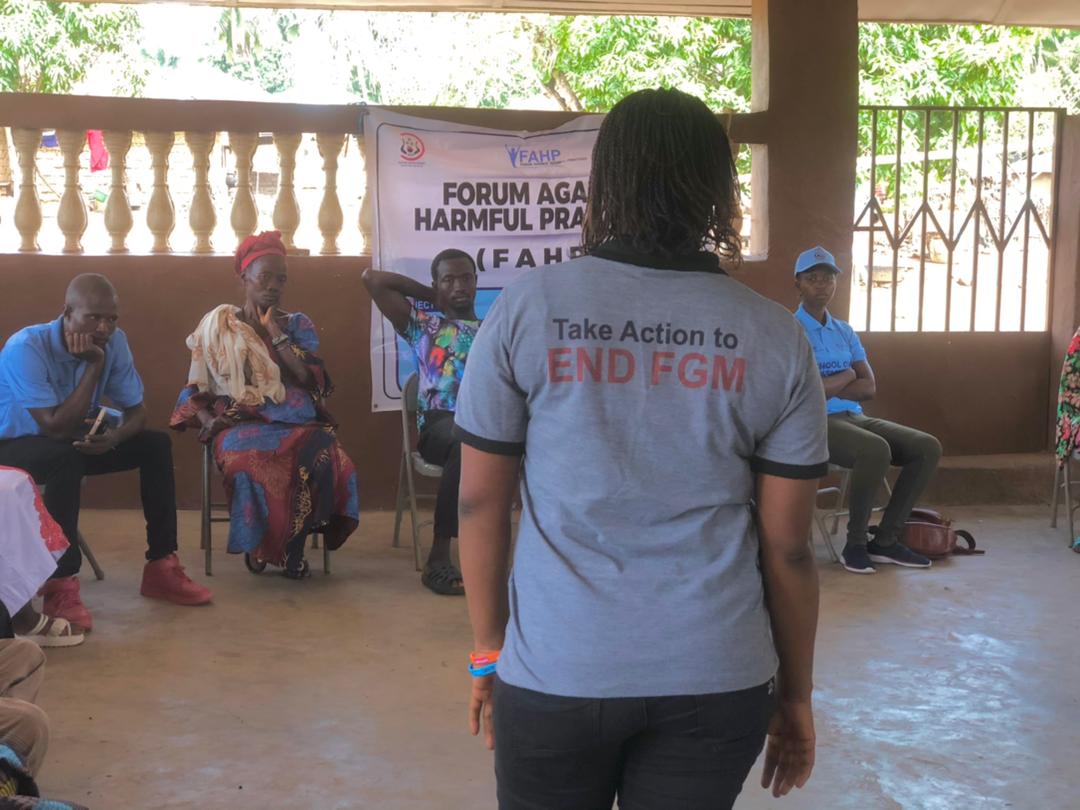
Day 4!

Consistent sensitization represents a vital strategy in combating FGM by facilitating open dialogue within communities. Through active engagement with key stakeholders—particularly tribal leaders and fostering an environment conducive to sharing alternative perspectives on gender norms and health implications, communities may gradually move away from harmful practices like FGM.

#endFGMC#16DaysOfActivismAgainstGenderBasedViolence#EndViolenceAgainstGirls#fahp

Day 3!

The Bondo culture, a significant aspect of Sierra Leonean heritage, has historically been intertwined with the practice of female genital mutilation/cutting (FGM/C). However, it is increasingly recognized that the cultural significance of Bondo can be preserved and enjoyed without resorting to FGM.

By emphasizing empowerment through alternative practices and recognizing women’s roles within their communities without resorting to harmful rituals, it is possible to enjoy rich cultural heritage devoid of violence against women and girls.

#endFGMC#EndViolenceAgainstGirls#16DaysOfActivismAgainstGenderBasedViolence#fahp

Day 1.

As we begin the 16 Days of Activism, it is critical to highlight that violence against women and girls remains a critical global issue and FGM is a severe form of gender-based violence.

#EndFGMC #16DaysofActivism #16DaysOfActivismAgainstGenderBasedViolence #FAHP

Madam Aminata Koroma, the current Executive Secretary for the Forum Against Harmful Practices (FAHP), has been a relentless advocate for women’s and girls’ rights for over 20 years.

Her notable contributions to the movement against harmful traditional practices in Sierra Leone especially against Bondo initiation of girls and women, have earned her a spot on the spotlight for the prestigious 7th Bai Bureh Service Delivery Awards 2024.
With vast experience working alongside both national and international organizations, Madam Koroma has committed her career to eradicating practices like Female Genital Mutilation (FGM) and advocating for the empowerment of women and girls.
Her dedication reflects a deep-rooted belief that every individual has the right to live free from harm and to thrive in an environment that promotes gender equity.

As the Executive Secretary of the FAHP, Madam Koroma leads a coalition of 26 national organizations working to combat harmful practices, particularly those that negatively impact women and girls. Her leadership plays a critical role in raising awareness about the consequences of these practices, particularly within the Bondo Society, where FGM has longstanding cultural ties. By mobilizing community leaders, engaging grassroots organizations, and initiating advocacy campaigns, Madam Koroma has positioned the FAHP as a key player in the fight against these harmful traditions.


Her efforts illustrate her commitment to transforming societal norms and practices that perpetuate gender inequality.
Madam Koroma’s extensive background in advocacy and activism has equipped her with the skills necessary to address the intricate challenges faced by women and girls in Sierra Leone. Her work has not only involved direct advocacy but also the development of educational programs aimed at empowering women and girls to assert their rights.
By providing resources and training, she ensures that young women and girls have the tools they require to challenge traditional norms and pursue opportunities in education and employment. This holistic approach fosters a generation of empowered individuals who are prepared to dismantle oppressive practices and advocate for equal treatment for all.
Through the FAHP, Madam Koroma has built collaborative partnerships with various stakeholders, including governmental entities, non-governmental organizations, and community leaders. These alliances have been instrumental in fortifying the movement against harmful practices.


By fostering dialogue among different sectors of society, she has facilitated a shared understanding of the adverse effects of FGM and other harmful practices, generating collective action toward the eradication of these traditions.
Her collaborative efforts are particularly significant as they highlight the importance of community engagement in creating sustainable change.


The recognition of Madam Koroma at the 7th Bai Bureh Service Delivery Awards 2024 serves not only as an acknowledgment of her hard work but also as a rallying call to action within Sierra Leone as it also underscores the significance of addressing harmful traditional practices and the need for continuous dialogue on gender equity.
By highlighting the contributions of dedicated individuals like Madam Koroma, the awards aim to inspire others to engage in advocacy and activism, creating a wave of change that can ripple throughout communities.


Her recognition brings renewed focus on the FAHP’s mission and the collective fight for a society free from gender-based violence.
Madam Aminata Koroma’s enduring commitment and activism in the fight against harmful practices make her a deserving woman to be honoured at the upcoming Bai Bureh Service Delivery Awards. Her leadership within the Forum Against Harmful Practices has solidified her position as a strong pillar of hope for many women and girls who are striving for a better future in Sierra Leone. By championing the cause of gender equity and providing essential support systems, Koroma is not only advocating for significant changes today but also working toward the realization of a society where women and girls can flourish, and be free from the shackles of harmful traditions. Through her continued efforts, she exemplifies the transformative power of dedicated activism in the pursuit of justice and equality.

By  Ragan M. Conteh

The Forum Against Harmful Practices (FAHP) has, in a press conference, raised concerns over the recent torture on a woman at Kangama Gorama town, Gorama Chiefdom, Kono district.

According to a press statement read by one of the the pupils, it reads:

“The attention of the Forum Against Harmful Practices (FAHP) has been drawn to a recent unfortunate incidence of a physically and emotionally torture of a woman (whose name is withheld for now) by a group of women at a Bondo Bush in Kangama town, Gorama Chiefdom, Kono District.”

The press release further states that FAHP wishes to express extreme concern over the inhumane, degrading and human rights violation perpetrated against this woman. This gruesome crime was heartlessly carried out at an unsecured place. It is hoped that places must be well-protected to ensure and maintain the dignity of the Sierra Leonean women. Rather, the palace in this story represents a place of torture, a prison and a perfect hide-out to execute such a serious offense, according to FAHP.

“The victim was physically assaulted with visible grievous bodily harm, beaten and disgraced to the extent of shaving her head and her private part and to make matters. Worse, she was even forced to drink spiritual concoction (manessie) which made the victim to have suffered from a psychological trauma, “the e release states.

Forum Against Harmful Practices (FAHP) recognizes that the incident in question is presently a subject matter of Police investigation. However, the circumstances which led to such a barbaric conduct has no place in modern time civilization and particularly so,

Cannot be applauded by the Law of Sierra Leone, No one is above the Law and therefore should not take the Law into their own hands to the extent of torturing, imprisoning and assaulting the victim in such a manner.

This incident brings to clear sight some of the unknown and secret cruelty that goes on in some of these Bondo bush places and it gives a further insight into the possible many crimes that have taken place and may continue to be carried out in these places if due care and attention is not given to the dire concerns of well-meaning Organizations like  the Forum Against Harmful Practices (FAHP) which are tirelessly bringing to the attention of government and other stakeholders of the growing incidents been perpetuated in these Bondo Bushes and  it is becoming a national concern.

In the meantime, FAHP is following up with the Ministry of Gender, its partners in Kono, other stakeholders and the Police on the issue, to ensure the safety of the victim and also to bring the perpetrators to face the full extent of the Law as a retribution for their barbaric act.

FAHP calls on Government through the Ministries of Gender and Children’s Affairs, Social Welfare, Local government, Public and Political Affairs to:

  1. Ensure the safety of the Victim and her family,
  2. Reduce the number of Bondo bushes,
  3. Monitor Activities within, the these Bondo bushes Ensure that Justice for the victim.