News

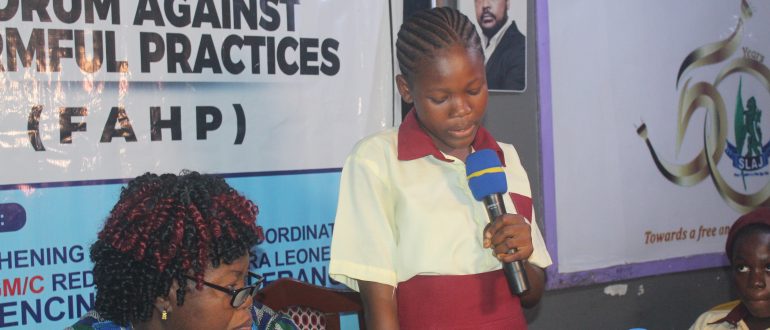
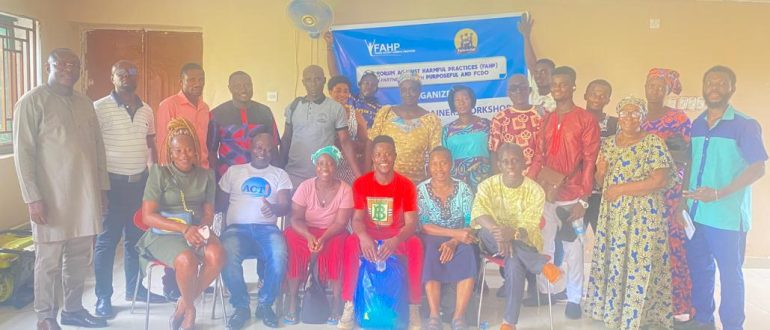
FAHP, a leading advocacy group against human abuse and violations, has concluded a National High Profile Dialogue with Stakeholders in Port Loko.

The essence of the dialogue was to underscore a review of the National Strategy for the Reduction of FM/C.

In 2015, the Government of Sierra Leone through the then Ministry of Social Welfare, Gender and Children’s Affairs, including UN Agencies and Non-Governmental Organizations drafted a National Strategy for the Reduction of FGM/C. The Strategy was set to run for the period of 2016 to 2020.

It was a detailed and comprehensive roadmap of interventions to prevent, reduce and end incidences of FGM/C in Sierra Leone.

The strategy was never approved regardless of the national consultations and validations and engagements with the previous government of Sierra Leone.

Series of engagements were being held recently with the line Ministries of Gender and Children’s Affairs, Public and Political Affairs, Social Welfare, Education, Local Government and Rural Development and Internal Affairs of the current government and political parties to influence the approval of the Strategy but it is still being faced with challenges in getting a way out.

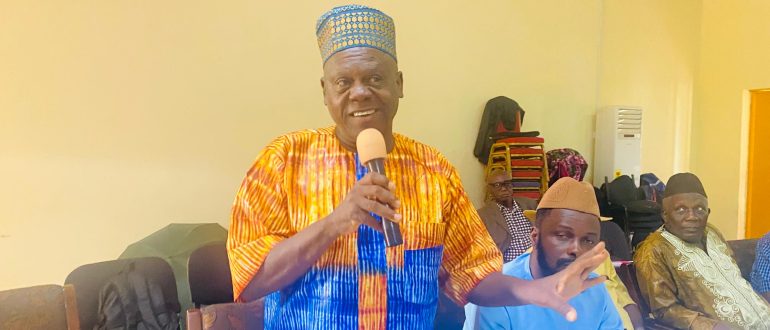
The Strategy was meant to enhance Government’s commitment in the fight against FGM/C in the country. The engagement had a massive turnout of MPs, Mayors and Paramount Chiefs from various districts. The engagement was fruitful and stakeholders pledged their allegiance to supporting the approval of the strategy.

By Ragan M. Conteh

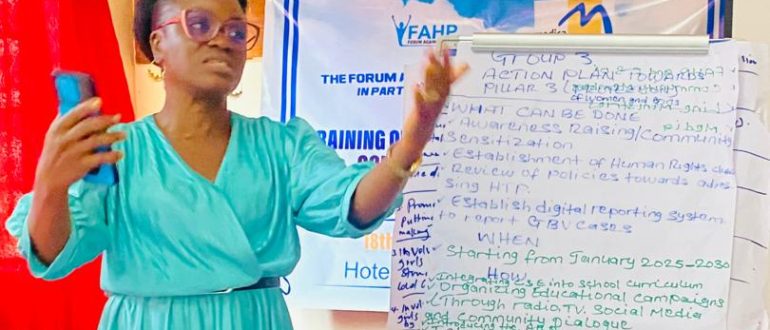
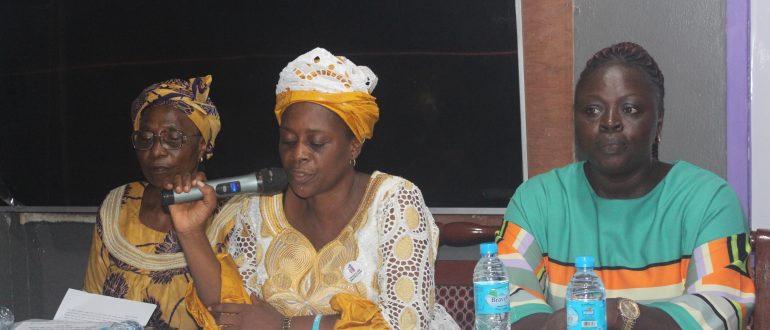
The forum against harmful practice (FAHP) has commenced a two day training on the United Nations Security Council Resolution 1325 and on the Sierra Leone National Action Plan.

The training which is supported by Medica Mondiale is ongoing at the Hotel 5:10 in Freetown.

In her presentation, Anita Esther Momoh, from the Gender Ministry, said the UNSCR is anchored on 4 main pillars and one is on prevention of conflict and all forms of violence against women and girls.

According to Anita Momoh, she said it increases the participation of women and their leadership in peace and security processes. She said that the training also geared towards the protection of women and girls from violence, including sexual and gender-based violence.

She intimated that the UNSCR 1325 protocol also anchored on relief and recovery thereby addressing women’s and girls’ relief and recovery needs during conflicts and post-conflict situations. She stated that it is about the prevention of conflicts and all forms of violence against women and girls.

She stressed that it leads to the adoption and implementation of laws and policies that integrate a gender perspective into peace and security including advising for the allocation of adequate budget to government departments that address women’s issues above.

She pointed out that the agenda work towards ensuring an inclusion of women in decision-making positions in institutions for peace and security. She maintained that it is an establishment for an early warning and response mechanisms that reflect a gender perspective. She however stated that it has measures to prevent and reduce incidents of sexual and gender-based violence against women and girls.

Madam Anita Momoh said the resolution also serves as a protection of women and girls from violence, including sexual and gender-based violence. It also about the adoption of legal and policy frameworks that protect the rights of women, including women protection from sexual and gender-based violence.

It also includes the mechanisms for implementing the laws and policies for protecting women’s rights including sexual and gender-based violence, laying out mechanisms for monitoring the implementation of the laws and policies for protecting women’s rights including protection from sexual and gender-based violence.

The measures are taken to capacitate security forces to protect women’s rights, including on the prevention of and response to sexual and gender-based violence.

The UNSCR protocol contains training on measures established to respond to women and girl survivors of sexual and gender-based violence. Quality of sexual and gender-based violence protection and response measures, access, budget, staff. It also informs about measures taken to protect the rights of women in refugee and internally displaced persons (IDP) camp.

By Ragan M. Conteh

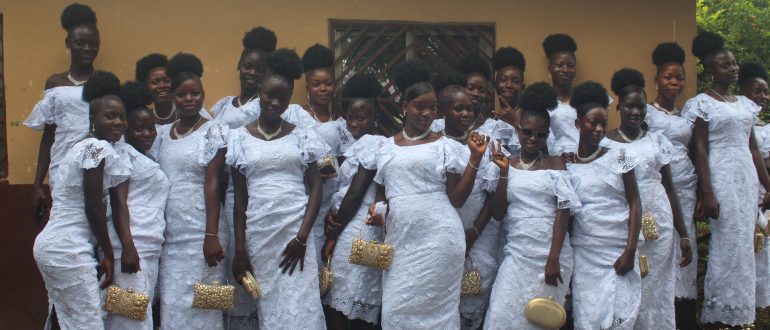
After 20 Bondo women graduated from bloodless Bondo in Moyamba District, the Executive Secretary, Madam Aminata Koroma and her entourage, paid visit to Madam Yoko’s grave in Moyamba township.

Madam Yoko is known to be the founder of the Bondo Secret society in Sierra Leone, a strong woman that initiated many full grown women.

Speaking at the grave site of Madam Yoko, the Executive Secretary of the Forum Against Harmful Practices  (FAHP), Aminata Koroma said the visit was to pour libation and to give respect to the late, and strong woman of Sierra Leone.

According to Madam  Koroma, through the support of Irish Aid,  forum member organisations praise the foundation to have successfully completed the first Alternative Rite of Passage of girls and women in Moyamba District. She said the 20 new initiates had gone through all the Bondo processes except the procedure of cutting the female genitalia.

She stated that, the ceremony was very colorful and they took the 20 initiates to Madam Yoko grave site in respect of her hard work towards standing for women empowerment in the country.

Madam Koroma maintained that the forum first piloted bloodless Bondo in Moyamba District will go down in the history of this nation.

She lauded the people of Moyamba for embracing what they believe is a “stress-free bondo” and called for collaborative efforts by all to end FGM in Sierra Leone. She also assured Soweis and parents of continued support to initiate more women into the safer Bondo for women and girls.

Making his statement on the graduation / exhibition ceremonies, the Paramount Chief of Kayanba Chiefdom, PC Foday Momoh Kulama said the initiation of 20 women in the bloodless Bondo  is a new beginning of a turn around.

He welcomed all the concerned organisations in his district and thanked them for initiating a safer cultural practice in his district. Chief Kulama said the new culture resonates with the need to end the wicked culture against women and girls.

He pointed out that as Paramount Chief he  strongly supports a culture that will bring women together and other educative platforms. He pledged to always stand with Praise Foundation and FAHP to empower women in his district.

The head of Sowies in Kaiyamba Chiefdom who handed over the 20 new initiates to the Paramount Chief said all the girls have gone through all the Bondo processes and are now full grown women who can make their decisions.

She said the ceremony was very successful as all the girls never underwent FGM but passed through all the Bondo society ceremonies and could enter any Bondo society bushes across the district. She thanked Praise Foundation and FAHP for their unwavering commitment to transforming the institution to a unique and unified force.

“Since we began to put Bondo society, this is the best ever, we eat, we have funds and everything is available and it doesn’t cost parents a dime,” she confirmed.

The head of Soweis at Kayanba chiefdom pleaded to FAHP and Praise Foundation to help and continue with the bloodless in the district.

Praise Foundation focal person, Elizabeth Bangura said some of  the 20 graduands are University students, WASSCE and BECE students. She said they scrutinise them and make sure they are not underage. She thanked Irish Aid through FAHP for supporting the Foundation to have the first batch of bloodless Bondo ceremony in Moyamba District.

She said the ceremony serve as an eye opener and a direction for women and girls to be empowered in future. She dilated on the need for more support to have such ceremonies in the not too distant future. She pledged for more robust activism among women and girls to stopping the retrogressive tradition.

WAVES Project Officer made a statement and the Chiefdom Speaker of Kayanba Chiefdom also lauded the venture and pleaded for more education on the dangers associated to FGM.

The Director of Praise Foundation, Martin Moriwai also expressed his organisation’s commitment to transforming the lives of the vulnerable in the district. He pointed out that the bloodless Bondo is a testament of his foundation and partners’ relentless efforts to push for safe culture for women and girls. He also give accolade to all those soweis that participated in the pilot bloodless rite in the district.

By Ragan M. Conteh

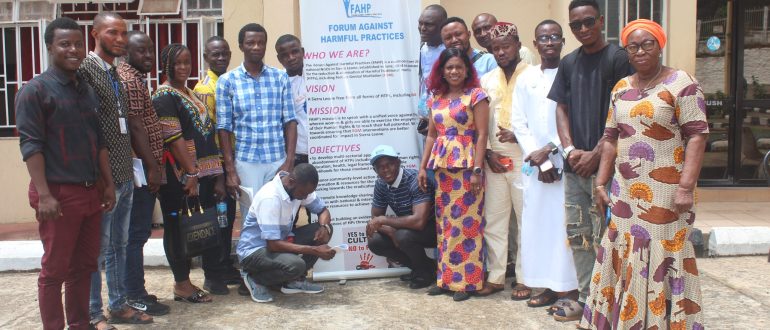
The Forum Against Harmful Practices  (FAHP) has ended a two-day-training of trainers (TOT) for frontline professionals including focal teachers, community outreach officers on gender and FGM issues.

The trainees were presented with FGM training manual produced by a leading consultant Rev. Moses Frederick Khanu and funded by Irish Aid. The two day engagement was held at the Prince Tuner Hall, Black Hall Road Igbo Town, Waterloo in the Western Rural District. It was organized starting from Thursday 27th and ended on Friday 28th June 2024, and the program was very engaging.

The participants who attended came from implementing partners including (WAADO-Waterloo and ACT-Pujehun). The development of the training manual was funded by the Irish Aid through the project titled: “Strengthening FAHP for the coordination of FGM reduction in Sierra Leone, influencing Zero Tolerance.”

The manual was designed to enable and support the work of field facilitators in delivering the training to Female Genital Mutilation (FGM) work groups. The manual provides a comprehensive, standardized content and skills needed to promote the fight to end the practice of female genital mutilations (FGM) in Sierra Leone.

The TOT aimed to equip participants with the broader understanding of the socio-cultural context of the practice, knowledge and awareness, skills, and resources necessary to help trainers and advocates in the campaign to end FGM.

It is hoped to provide them with relevant skills in an enabling environment for a new world where Sierra Leonean women and girls are living free from the abuse and violence of FGM whilst enabling them to live in a safety, dignified and with freedom.

The TOT will also serve as a platform for capacity building, thus fostering collaboration and the empowerment of participants to lead community-based initiatives and awareness campaign.

This manual was developed within the framework of the project “Strengthening the Forum Against Harmful Practices (FAHP) for the coordination of Female Genital Mutilation/ Cutting in Sierra Leone Influencing Zero Tolerance.”

The manual which has been used by FAHP is a comprehensive tool that field facilitators across the wider stakeholders (Government and Non-Governmental Organizations).

It can be used as a roadmap to rally discourse around Female Genital Mutilation from a gender perspective in order to increase participants’ understanding of FGM/C to be seen as a harmful practice and a form of violence against women and girls.

The manual was well-researched and rich in content, providing facts, root causes and socio-cultural dimensions on the practice and knowledge about the most innovative and successful interventions.

Delivering presentation, the Executive Secretary of FAHP, Madam Aminata Koroma, said “that Female Genital Mutilation/ Cutting (FGM/C) is a deeply-rooted cultural practice that has persisted for centuries which has been affecting the lives of millions of women and girls worldwide.”

Ms Koroma went on to say that “FGM/C poses a grave threat to the physical, psychological, and reproductive health of women and girls.” She continued by saying that the practice “infringes upon their basic human rights and perpetuates gender-based violence.” Furthermore, she stated that “the need to address FGM/C is not only a moral imperative but also a global health and human rights priority.”

Madam Koroma continued by saying that “the Forum Against Harmful Practices expresses unwavering thanks and appreciation to Irish Aid- Sierra Leone for providing them funds toward the project.”

The Project Manager of FAHP, Mr Ishmael Cole, made his submissions on the topic: Understanding of Gender Perspectives in Sierra Leone. In his introduction, he said the section of his training “brings out how gender and FGM/C are interconnected which highlighted the inter-sectionalism of gender-based violence and discrimination.”

According Mr Cole the section of his presentation defines gender, sex, gender socialization, gender stereotype, and the dismantling of gender stereotypes. He also spoke on the traditional practices that further demonstrates the notion that FGM/C as a tradition is very harmful.

He also said FGM as a harmful tradition which further highlights the power dynamics, its violent nature and the lack of consideration around victims’ concent, survivors by the perpetrators.

Lawyer Rachael Samba Esq. then delivered a presentation on the Legal Framework and FGM. She went on to explore the legal framework that underpins the campaign against FGM/C in Sierra Leone including international and regional conventions on the rights of women and girls and the relevant national laws.

By Ragan M Conteh

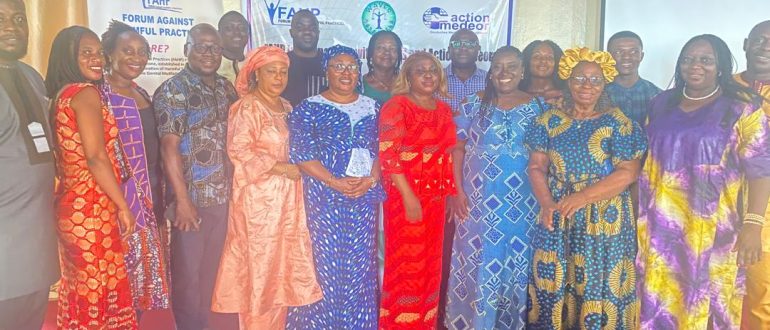
The Forum Against Harmful Practices  (FAHP) in collaboration with WAVES and Action Medeor has engaged Members of Parliament from different committees in Parliament on the alternative rite of passage, a strategy to unlink the Bondo culture from FGM.

The engagement took place at Hotel 5-10 in the east of Freetown.

Giving the purpose of the engagement, the Forum Secretary Madam Aminata Koroma said the purpose was geared towards persuading lawmakers to see the need and fully participate and join the movement to end FGM.

She informed lawmakers that the government of Sierra Leone has signed international treaties and instruments for the total elimination of Female Genital Mutilation (FGM). She cited the Maputo Protocol, CEDAW and other conventions.

She stressed that the FAHP activities is to support government on what they have signed into, adding that the Forum has done so much advocacy to end the practice of female genital cutting of a body party in all places in Sierra Leone.

According to Madam Koroma, the alternative rite of passage is a safe form of Bondo, stating that they have piloted the bloodless Bondo initiative in Port Loko, Tonkolili and Bo districts and all went successfully.

“What we are doing as activist is to give more power and education to women and girls. “In the Bondo bush we are training young girls on all aspects in the society excluding the cutting of the female genitalia.”

She said bondo is a society where women meet and discuss on their progress and empower themselves. Madam Koroma maintained that Members of Parliament are very important in the advocacy as they fight hard to end FGM in the country.

The engagement was done in a bid to plead to MPs to support the Forum and to serve as ambassadors in the fight to end FGM.

She also elaborated on the need for MPs to stop sponsoring their constituents to conducting initiations of women and girls, stating that FGM is not a respecter of age of consent policy. “FAHP is working for total abandonment of FGM. It is more dangerous when a woman is initiated into the society,” she asserted.

Madam Koroma also explained on the deaths of many girls in recent years and spoke on the ongoing court cases hearings which are related to FGM. She spoke about the advocacy activities in communities across Sierra Leone.

She further said FAHP has engaged stakeholders on the dangers associated to the practice, citing the engagement with religious leaders, Chiefs, Soweis, parents and stakeholders of government..

She pointed out that they’d actively be supporting government in building schools in community through the replacement of bondo bush to schools, micro credits scheme and among many others. She urged lawmakers to embrace the advocacy for the well-being of all Sierra Leoneans.

In his submissions, the Programs Manager of FAHP, Ishmael Cole spoke about programme implementation and how FAHP is working to end all forms of harmful traditional practices in Sierra Leone.

He said as a way to working towards clocking zero FGM, the forum has established husband clubs, school clubs of influence, community led initiatives which are all meant to remove the harm in the Bondo culture. He further elaborates on scientific research which has proven that Sierra Leone is more FGM prone and is among the highest FGM prevalence.

He said there is currently no law on ending FGM but cited the preparation of the National Strategy which is yet to be signed by Social Welfare Ministry. He stressed that the National Strategy to end FGM is not talking about ending Bondo society but it guides the pathway to eradicate FGM in the Bondo culture.

Mr. Cole alluded to the fact that MPs have critical role to play in ending FGM in their communities.

Rebecca Cole from the Amazonian Initiatives Movement (AIM) also gave her presentation on bloodless rite and how the implementation has been successfully done in communities in Port Loko, Tonkolili and Bo districts respectively.

In her response, the Member of Parliament from Western Area District, Hon. Miatta Amara thanked FAHP for education imparted to them on the dangers of FGM. She said as lawmakers they are listening to the voices of rights activists and will take their messages down to their subjects. She urged the forum to go down to the communities and educate the people on similar engagements and by so doing FGM practice will end.

Hon. Daniel Fornah from Tonkolili District also thanked FAHP for the engagement and urged the Forum to put more weight on community engagements than the elites. He said the communities are more prevalence on FGM and they should be educated on the dangers associated to it.

Hon. Rosy Kanu from Western Area also spoke on the need for more advocacies and pledged to take the fight further.

Many lawmakers made strong commitments to joining the fight against FGM.
By Ragan M Conteh

The Forum Against Harmful Practices (FAHP) has ended a day’s national media workshop on Female Genital Mutilation (FGM)‘s sensitive reporting. The workshop took place on Friday 10th May 2024 at the Hotel 5-10 , east end of Freetown.

The workshop drew participants from television, radio and newspaper institutions across Sierra Leone.

Giving the status of the FAHP activities, the Executive Secretary of the Coalition, Madam Aminata Koroma, informed participants that FAHP is a coalition of over 20 civil society organizations with the aim of ending all forms of harmful  traditional practices and gender-based violence in Sierra Leone.

She further said that FAHP has also engaged in advocacy for zero tolerance on FGM in the country. Madam Koroma maintained that as a coalition one of their activities is to train religious and traditional leaders on the need to help curtail the prevalence of FGM practice across country.

She went further to elucidate how the media training geared towards impacting knowledge on journalists in FGM reporting. She dilated that the training further gives more information about FGM reporting and advocacy skills.

In his succinct and thoughtful statement, the Program Manager of   FAHP, Mr Ishmael Cole informed participants that as a coalition they have done extremely well in terms of advocacy to end FGM in the country.

He spoke on the several engagements they have conducted in respect to changing the mind set of stakeholders, soweis and communities inhabitants on the dangers associated to the heinous practice.

Mr. Cole pointed out that FAHP has established 40 “husbands-clubs” as part of the Irish Aid project, and with 40 “mothers-clubs” as well as using education and strategic advocacy to end FGM in the country. The coalition, he said, has set up adolescent clubs so as to inject positive education on the need to end FGM.

“We have established schools of influence clubs, village savings loan scheme as well as promoting the economic status of women in communities across Sierra Leone,” he asserted.

As a way to work towards zero tolerance on FGM, Mr Cole added that FAHP has supported and is still supporting FGM related cases and the coalition is making steady progress on those cases.

He told journalists that the coalition has engaged schools’ rehabilitations. He ended that the coalition is working on zero tolerance and it sees FGM at every stage as traumatic and it fights to minimize human rights violations. Mr Cole stressed that FAHP is also working towards providing education and policy formulation.

The Lead facilitator, Kelvin Lamin Lamdo, gives gave a PowerPoint presentation on Mainstreaming Female Genital Mutilation as sexual and gender-based violence in the mass media.

Lamdo pointed out that journalists should crosscheck information with the right authorities before publishing the FGM stories. He urged the media to know the various advocacy timeline and plans with FAHP and what to put out and at when. He urged participants to promote and protect the image of FAHP by using close collaboration with FAHP.

He also highlighted how journalists should be dedicated on reproductive issues, and FGM/SGBV reportage.

Various participants pledged their commitment on zero tolerance and on the need to continue their advocacy using their various media platforms.

By Janet A. Sesay

11 children are still held hostage in a Bondo Shrine in Kambia district, Northern Sierra Leone, FAHP (Forum Against Harmful Practices) says in a report released recently.

FGM (Female Genital Mutilation) has been long-standing harmful practice affecting women and girls in Sierra Leone with initiates sometimes losing their lives.

Laws and policies put in place to protect women and girls have been repeatedly infringed on by the initiators especially in the remote communities.

Established in 2014, FAHP is a coalition of national and international organisations fighting FGM (Female Genital Mutilation) and child marriages in Sierra Leone.

The organisation made the claim about the hostage of initiates in a press conference held last Wednesday in Freetown where three FGM-related deaths were confirmed.

Salaymatu Jallo aged 13,  Kadiatu Bangura 17 and Adama Sesay 12 succumbed to death in the hands of the ‘Bondo’ initiators.

The deceased, according to FAHP, was initiated in ‘Bondo’ shrines at Kabylor, Bubuya and Mankneh Villages in Kambia and PortLoko districts.

Rugiatu Neneh Koroma, head of FAHP has condemned the act and called for action against those responsible for the deaths. The FAHP head, an ardent anti-FGM campaigner, has been calling on government to end the ‘Bondo’ practice in Sierra Leone or replace it with ‘bloodless’ initiation.

The deaths are being looked into by the Criminal Investigation Department with three suspects including the ‘Bondo’ head, Barlay Turay in police custody.

The matter was reported on 2nd January, this year at Madina Police Station in Kambia district.

FAHP told journalists that the remains of victims were exhumed and examined by Dr Samba Jalloh of Kambia Government Hospital, and autopsy reports would be released shortly.

The story of a 21-year-old woman from Bonthe district who was forcefully initiated in a ‘Bondo’ bush also came up at the press briefing as the family had been crying for justice.

Looking back at the past, FAHP head said she was one among   thousands of women and girls in Sierra Leone whose dignity was violated through FGM, and urged government and other agencies to place a ban on Bondo activities throughout the country.

“We call on Human Rights Commission, National Council of Paramount Chiefs and the Sowei Council to speak up on the negative effects of the practice. We also demand prosecution for the deaths as we remind government that loss of one  life is a loss to humanity,” she appealed.

She pointed out that health complications and FGM effects are the same regardless of the age of a woman or girl.

By Hassan I. Conteh

A coalition of 26 NGOs has urged government of Sierra Leone to impose an immediate nationwide ban on the practice of Bondo society in the country.

At SLAJ Harry Yasaneh Memorial hall, advocates who are championing a total eradication of Female Genital Mutilation (FGM) echoed one voice in a press statement on Wednesday February 21, 2024.

The 26 members of Forum Against Harmful Practices (FAHP) called on respective government’s ministries and the people of Sierra Leone to ensure a speedy justice to be served on the latest deceased of the three female initiates during a Bondo bush ritual in Kambia and Port Loko district January this year.

Madam Rugiatu Neneh-Turay, FAHP’s chairperson says until the cases of the young girls ( ages Salaymatu Jalloh 13; Kadiatu 12, and another 17 ) who suffered an untimely death in the hands of the soweis are treated seriously before they could stop their fight to seek justice for the poor victims.

“The fight against FGM is a fight for all; it is not only social welfare ministry that should be concerned about FGM practice across Sierra Leone; local government ministry , information and civil education ministry, education ministry, health ministry, welfare ministry, gender affairs have a role to  play in this,” says Madam Rugiatu Neneh-Turay.

Adding her view, FAHP’s deputy chair, Hannah F. Yambasu, explains: “FAHP, we’ll never give up; many girls have been tortured and killed in bondo bush, and as we always say enough is enough.

“The girls who have died would have been people taking after us after we would have gone, so we are not celebrating; we are mourning [them],” she said.

FAHP is condemning FGM practice but had earlier brought the Alternative Rite of Passage (Bloodless Rite) as a replacement to the traditional genital cutting of girls and women by the soweis.

FAHP issued Wednesday’s press statement in connection to the death of one Salamatu Jalloh at Kabylor village in Kambia district early January this year. FAHP said, in Kambia and Port Loko districts about five children have died shortly after Salamatu’s tragic death in a bondo bush. And a prominent sowei and a suspect of Jalloh’s death, Mbalay Turay ( bondo principal initiator) was arrested and taken to Madina police station  for an investigation into the cause of the teenager’s death.

FAHP, which was formed in 2014, has made incredible successes in the fight against FGM practice in Sierra Leone.

Its current project to end all forms of harmful practices on girls and women is being sponsored by Ireland’s Irish Aid.

Ishael Cole, FAHP’s program co-ordinator, says they are having Mothers Clubs, School Clubs, Boys Clubs, Women Agents, and have been doing town-hall meetings as strategies to disabuse the minds of people from sending their girls into bondo society.

“I tell you there are lots of resistances among young girls these days who are refusing to be initiated into the bondo society,” says Mr Cole.

The Forum Against Harmful Practices recently celebrated Zero Tolerance Day for Female Genital Mutilation (FGM) in collaboration with partners Praise Foundation in Moyamba and MOAWOMA in Kenema, emphasizing a collective commitment to eradicating this harmful practice. Observed annually on February 6th, the International Day of Zero Tolerance for FGM serves as a crucial platform to raise awareness and mobilize efforts towards complete elimination by 2030. This year’s theme, “Her Voice. Her Future: Investing in Survivors-Led Movements to End Female Genital Mutilation,” underscores the importance of empowering survivors and incorporating their experiences into advocacy efforts against FGM. Thus, the forum’s celebration aligns seamlessly with global initiatives aimed at fostering survivor-led movements.

Despite advancements in reducing FGM prevalence worldwide, significant challenges remain. The United Nations has called for coordinated community engagement to address deeply rooted cultural norms that perpetuate such practices. The complexities surrounding anti-FGM policies necessitate a nuanced approach that considers cultural contexts while tackling ethical dilemmas associated with traditional practices. For instance, while zero-tolerance policies focus on traditional forms of genital cutting, they often overlook other procedures that involve similar tissue removal. This inconsistency raises questions regarding the broader implications of anti-FGM initiatives and highlights the need for comprehensive discussions involving diverse community stakeholders.

In conclusion, the celebration of Zero Tolerance Day for FGM by the Forum Against Harmful Practices represents an important step toward building awareness and fostering collaborative solutions. By prioritizing survivor-led initiatives and addressing cultural complexities surrounding FGM, stakeholders can work together more effectively to combat this harmful tradition and promote gender equity globally.

Research conducted by Owolabi Bjälkander and colleagues sheds light on the severe health complications associated with female genital mutilation (FGM) in Sierra Leone, a country with one of the highest rates of FGM globally. The study involved a cross-sectional survey of 258 women and girls who had undergone FGM, predominantly between the ages of 10 and 14. The findings revealed that an alarming 84.5% of participants experienced complications such as excessive bleeding, delayed or incomplete healing, and tenderness (Owolabi, 2023). These statistics underscore the urgent need for addressing the health ramifications of FGM in this region.

Furthermore, the research indicated that girls subjected to FGM before the age of 10 were particularly vulnerable to serious complications. This demographic is at a heightened risk for immediate health issues like fever and prolonged recovery times. Despite the prevalence of these complications, it was noted that while approximately 85.8% sought treatment, most opted for traditional healers rather than medical professionals. This reliance on non-medical interventions highlights significant gaps in healthcare access and awareness regarding FGM-related health issues (Owolabi, 2023).

The implications of Owolabi’s findings are profound; they point towards an essential need for increased education on the dangers associated with FGM and improved healthcare resources in Sierra Leone. Initiatives aimed at raising awareness about immediate health risks could promote better treatment-seeking behaviors among affected women and girls. Ultimately, addressing these issues is crucial not only for improving individual health outcomes but also for fostering broader societal change regarding harmful cultural practices like FGM.