News

In a groundbreaking ruling, the Economic Community of West African States (ECOWAS) Court of Justice has found the Government of Sierra Leone in violation of women’s and girls’ rights for failing to explicitly criminalise Female Genital Mutilation (FGM).

The Court declared FGM as “one of the worst forms of violence against women”, and that intentionally inflicted, “it meets the threshold for torture”. It ruled that the state’s failure to act breaches the Maputo Protocol, the African Charter on the Rights and Welfare of the Child, and other international human rights obligations that require states to outlaw harmful practices, specifically FGM. Thus, Sierra Leone’s inaction has caused grave physical, psychological, and social harm.

This landmark decision, delivered by a panel of judges representing the 12 ECOWAS Member States, holds Sierra Leone accountable — and sets a monumental legal precedent for the protection of women and girls across the region.

The case, brought forward by Kadija, a survivor, was filed by 31 movement partners from The Forum Against Harmful Practices, and Purposeful. It called into international attention the case of a woman who was forcibly subjected to FGM in 2016 and has been seeking justice ever since.

The judgment now mandates Sierra Leone to take immediate legislative measures to prohibit FGM, to promptly and effectively investigate and prosecute perpetrators of the FGM committed against the survivor, and to provide redress to the survivor, including financial compensation of $30,000 US Dollars, payable in Leones, to the survivor for the violations of her rights.

“This is a hard-won victory that has been ten years coming. While we celebrate today, this is for all girls and women, and the fight continues,” said Kadija.

“This historic win is not only for the survivor, and tenacity and her courage, along with the first responders, but for the 230 million women and girls alive today who have been subjected to the violence of FGM. Inaction is not an option. Sierra Leone has a duty to fully protect our women and girls,” said Dr Ramatu Bangura, Co-CEO, Purposeful.

“The ruling goes well beyond a legal win – it is a significant moral victory and a moment of reckoning for our country that now has the responsibility to eliminate this violence that has scarred generations of women and girls,” said Rugiatu Neneh Koroma, Chairperson of the Forum Against Harmful Practices (FAHP).

The judgment is timely as Sierra Leone’s women and girls now wait for the Child Rights Amendment Act to be sent back to Parliament for the enactment of laws that fully protect and uphold their human rights. And the world now watches Sierra Leone and ECOWAS for the implementation of this judgment to bring impunity out of the shadows, once and for all.

By Ragan M. Conteh

The attention of the Forum Against Harmful Practices (FAHP) has been drawn to a recent disappointing and frustrating incident in Kenema District concerning report of about 50 girls (over 50 percent below 18 years and the youngest of the age group about 3 years old) that were subjected to Female Genital Mutilation/Cutting (FGM/C).

The incidents took place in a Bondo Bush in the Gbo – Kakajama Section, Nongowa Chiefdom in Kenema District.

FAHP strongly condemns this unfortunate event at a time the government of Sierra Leone is working on an “Age of Consent” on the practice.

The action of the organizers of such an alarming magnitude of a practice considered HARMFUL by the World Health Organisation (WHO) breaches the “Convention on the Rights of the Child” and other international human rights obligations including the Maputu Protocol to which Sierra Leone is a signatory.

FAHP investigation team confirmed that the mass initiation was sponsored by a woman who together with her family is based in the United States of America (USA).

Painfully, some of the children cut and held in the Bondo Bush are school going children. These children missed out their schooling circle, more especially the end of school examination period that is a determinant to the promotion to the next level of education.

FAHP is extremely concerned that these children have been robbed of their bodily autonomy, health and dignity. Meanwhile, FAHP has worked with other partners including community stakeholders to ensure the safety of the children.

Therefore, FAHP has called on the government of Sierra Leone through its respective line ministries including Gender and Children’s Affairs and Education to take concrete steps against the perpetrators and the well-being of the children.

The coalition stands in solidarity with the girls of Gbo – Kakajama section, Nongowa Chiefdom in Kenema District and all children at risk of FGM/Cutting, reaffirming their commitment to a future where every child can grow up free from violence and discrimination.

By Ragan M. Conteh

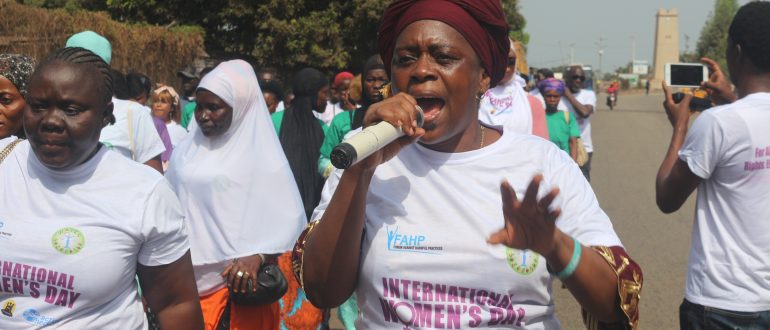
In a powerful demonstration of advocacy and solidarity, the Forum Against Harmful Practices (FAHP), in collaboration with WAVES, Action Medeor, Irish Aid, and Purposeful, marked International Women’s Day (IWD) with a high-profile event in Mile 91, Tonkolili District, northern Sierra Leone.

The gathering brought together women’s organizations from across the country, uniting in a shared commitment to ending Female Genital Mutilation (FGM) and advancing gender equality.

Since its inception in 1911, IWD has been a global platform for celebrating women’s achievements, raising awareness about gender-based discrimination, and driving action toward equality.

This year’s event in Sierra Leone was no exception, as women from all walks of life converged to demand an end to harmful practices that continue to endanger their rights, dignity and future.

As a call to action in ending FGM and Gender-Based Violence, the chairman of the event, Mr. Ishmael Cole, a renowned HeForShe champion and FAHP acting National Coordinator praised the resilience of women leading the fight against gender-based violence. He emphasized that IWD is not just a celebration but a reminder of the ongoing struggles for women’s equality, reproductive rights, and freedom from violence and abuse.

Mr. Cole urged women to remain steadfast in their pursuit of liberation from harmful practices like FGM, stressing that progress can only be achieved through collective action and persistent advocacy.

Talking about the harsh reality of FGM on a survivor’s perspective, Madam Rugiatu Neneh Turay, a leading advocate for women’s rights, delivered a passionate speech on the devastating impact of FGM. She highlighted the lifelong physical, psychological, and social consequences faced by survivors, stating:

“The removal of the clitoris for no medical reason has led to severe suffering for countless women. It increases child marriage, teenage pregnancy, and school dropouts, while also contributing to high infant mortality rates. Ending FGM is crucial for our girls to focus on their education and build a future free from oppression.”

Madam Turay emphasized that education plays a key role in empowering girls, enabling them to build confidence and challenge societal norms that perpetuate violence against women.

“Ending FGM, means, reducing teenage pregnancies, lowering infant mortality rates and breaking the cycle of poverty. I dream of a world where women live without fear whether in the bedroom or the labour room,” Madam Turay added.

She also debunked common myths around FGM, including the belief that it prepares girls for adulthood, preserves virginity, or enhances beauty. Instead, she called on women to reclaim their cultural identity without resorting to harmful traditional practices.

Holding leaders accountable, one of the critical themes of the event was accountability. Madam Turay called on politicians to stop using FGM as a tool for electoral gains and instead focus on building schools and creating economic opportunities for women and girls.

She also encouraged communities to embrace alternative rites of passage, citing Sierra Leone’s successful efforts to preserve the Bondo Society’s cultural significance without bloodshed.

“We must relocate the Bondo Society to natural settings, redefine its purpose, and ensure that women take ownership of their culture—without violence.”

Providing a legal perspective, Lawyer Judith Memuna Benjamin reaffirmed that FGM is a violation of human rights, as recognized by numerous international and regional legal instruments.

“While earlier human rights agreements did not explicitly mention FGM, they laid the foundation for protecting women from all forms of violence. Today, the international community recognizes FGM as a form of discrimination that violates women’s rights to bodily autonomy,” she stated.

She outlined key legal frameworks—including Sierra Leone’s Child Rights Act, CEDAW and the Maputo Protocol—which call for the abolition of FGM. She further emphasized that:

“Any practice that excludes or restricts women’s rights based on gender is discriminatory. FGM fits this definition, as it is a practice exclusively directed at women and girls, denying them the right to health, security, and dignity.”

Breaking the Cycle of Harm

The FAHP and its partners remain unwavering in their commitment to eradicating FGM through culturally sensitive approaches and community-driven initiatives. The event served as a platform for survivors, activists, and legal experts to strengthen their collective resolve, ensuring that duty bearers uphold their responsibility to protect women and girls.

As the event concluded, Madam Turay urged participants to take the message back to their communities and spread awareness and driving grassroots action.

“The fight against FGM is not just for activists—it is a collective responsibility. Every woman and girl deserves a future free from harm. Let’s be the change we wish to see.”

A future without FGM

The International Women’s Day celebrations in Mile 91 underscored a powerful message: the time to end FGM is now. With stronger laws, community engagement, and political will, Sierra Leone can eliminate this harmful practice and create a safer, more equitable society for all women and girls.

By Ragan M. Conteh

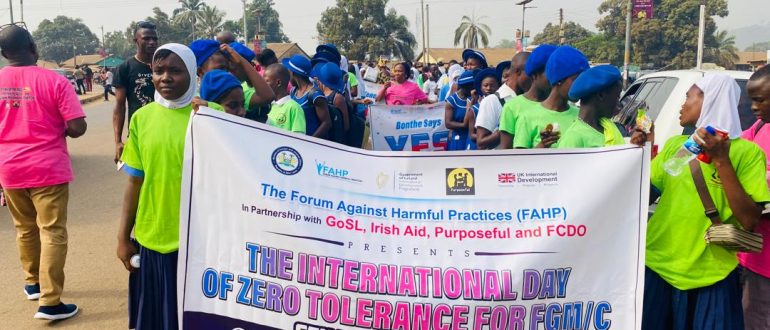
As the global community marked the International Day of Zero Tolerance for Female Genital Mutilation (FGM) on February 6, 2025, Sierra Leone took a significant step in the fight against this harmful practice.

The Forum Against Harmful Practices (FAHP), in partnership with Irish Aid, Purposeful, and the UK’s Foreign, Commonwealth & Development Office (FCDO), convened a landmark event in Kenema, Eastern Sierra Leone, to reinforce the call for an end to FGM in the country.

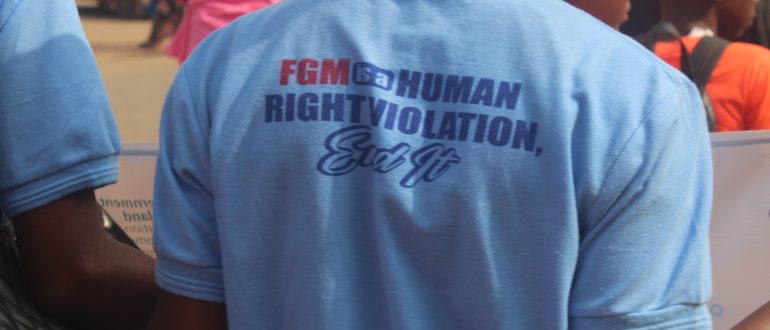
The commemoration event which  commenced with a float parade along the streets of Kenema City, brought together key stakeholders across Sierra Leone, including government representatives, Paramount Chiefs, religious leaders, Councilors, Soweis, students, civil society organizations (CSOs), husband clubs, school clubs, mother’s clubs, teachers, Members of Parliament, and various advocacy groups, underscoring a unified commitment to eradicating FGM in Sierra Leone.

A Global Commitment, A National Imperative:

The UN General Assembly declares February 6 as the International Day of Zero Tolerance for FGM in 2012, reaffirming the urgent need to eliminate this violation of women’s and girls’ rights. Despite global progress, Sierra Leone remains one of the few countries without legislation banning FGM, with an alarming prevalence rate of 83%, according to the 2019 Sierra Leone Demographic Health Survey (SLDHS).

Carol Hannon, Head of Development at the Embassy of Ireland, lauded FAHP’s tireless efforts in mobilizing action against FGM. She emphasized that FGM is a grave violation of fundamental human rights, urging for stronger government intervention and sustained advocacy to protect women and girls from this harmful practice.

”Ending FGM requires coordinated action at all levels. It is not just a women’s issue; it is a societal problem that demands the engagement of policymakers, community leaders, educators, and men as allies,” Hannon stated.

A Call for Urgent Action:

Haja Fatmata Sowa, Program Director at Purposeful, echoed the need for collective responsibility in eradicating FGM.

”We cannot stay silent while young girls suffer lifelong physical and psychological trauma. Ending FGM is not negotiable—it is a fundamental step towards achieving gender equality,” she said.

Ishmael Cole,  Acting National Coordinator of FAHP, highlighted the coalition’s advocacy efforts in combating FGM.

He further outlined various initiatives undertaken, including engagement with stakeholders to change mindsets, establishment of support clubs and advocacy for policy changes. He emphasized FAHP’s commitment to zero tolerance towards FGM, stressing the traumatic nature of the practice and its violation of human rights.

He also underscored FAHP’s support for FGM-related cases and its focus on education and policy formulation. He stressed on the importance of collaboration between FAHP and relevant stakeholders in promoting and protecting the rights of women and girls.

FAHP Chairperson, Madam Rugiatu Neneh Turay, delivered a powerful speech highlighting the ongoing struggles in Sierra Leone.

“While FGM is gradually declining, the lack of legal frameworks continues to undermine progress. We must challenge the normalization of this harmful practice and push for policy change,” she asserted.

Turay underscored FAHP’s commitment to transforming traditional rites of passage into non-harmful alternatives. “We have worked with religious leaders, schools, and former FGM practitioners to foster change. Many cutters have publicly renounced the practice, proving that cultural transitions are possible without endangering lives.”

Legislative and Policy Reforms: The Way Forward:

FAHP has been at the forefront of advocating for policy and legislative reforms to criminalize FGM in Sierra Leone. The organization’s latest project, Strengthening FAHP for the Coordination of FGM/C Reduction in Sierra Leone – Influencing Zero Tolerance, funded by Irish Aid, aligns with international human rights commitments such as the Convention on the Rights of the Child (CRC),  the Convention on the Elimination of all Forms of Discrimination Against Women (CEDAW) and Sustainable Development Goals (Goal 5.3).

“The absence of a national policy on FGM is unacceptable,” Turay declared. “We call on the government, traditional leaders, and politicians to stop using FGM as a tool for political gain and to take definitive steps to protect the rights of women and girls.”

A Collective Pledge to End FGM:

The event concluded with a resounding pledge from all participants to strengthen advocacy efforts, increase awareness, and push for legislative action. Paramount Chiefs, Members of Parliament, and government representatives commended FAHP and its partners for their relentless dedication to ending FGM.

“We stand together with communities across Sierra Leone and the world in saying: FGM must end now,” Turay affirmed. “Culture should never be an excuse for violating human rights. The time for action is now.”

The Zero Tolerance Day commemoration in Kenema not only highlighted the urgency of the issue but also reinforced Sierra Leone’s role in the global movement to eradicate FGM.

With continued advocacy, collaboration, and government commitment, the country can pave the way for a future where every girl grows up free from the threat of FGM.
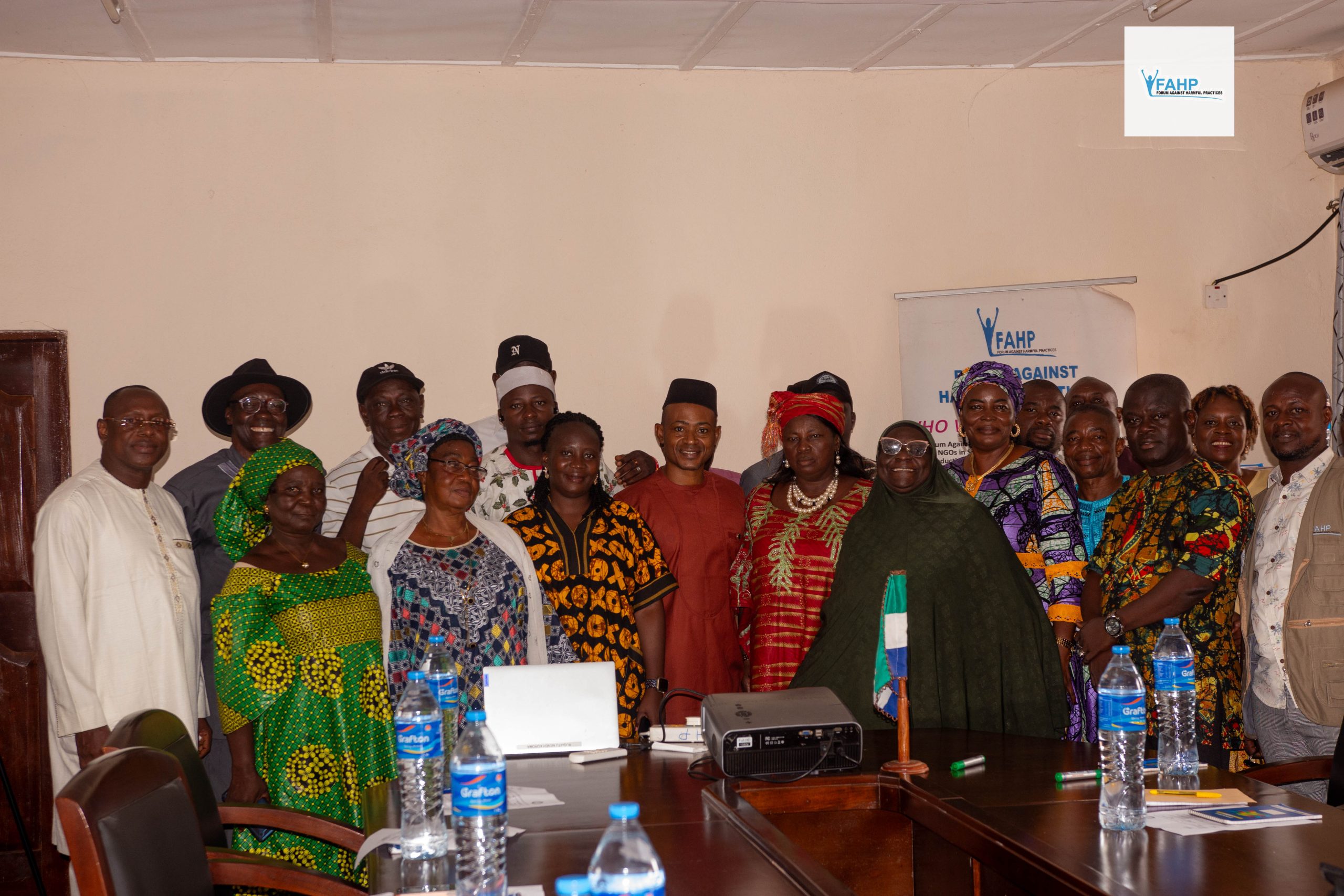
The Forum Against Harmful Practice (FAHP), a local advocacy group against bondo society and on violence against women and girls, has held a dialogue session with line ministries, Members of Parliament and Civil Society Organizations (CSOs) on the Review of National Strategy draft for the reduction of FGM cases in Sierra Leone.

The successful consultation took place on Wednesday 22 January 2025 at Buxton Church Hall, Charles Street in Freetown.

The National Strategy was developed to address both health, social and economic risks associated with Bondo society practice on girls and on women as well as its effects on society.

The document serves as a tool for informed advocacy and cultural awareness against the practice of Bondo society and other related health aspects. In other to foster successful consultations among relevant line ministries, policymakers and CSOs, FAHP aims to create a comprehensive framework that prioritises education and awareness raising campaigns and to promote the “new cultural contexts” of bondo society.

Given the context of FGM in Sierra Leone, FAHP’s National Coordinator, Ishmael Cole said female genital mutilation (FGM) is a practice that involves altering or injuring the female genitalia for non-medical reasons.

Cole said FGM refers to all procedures involving partial or total removal of the external  female genitalia or other injury the female genital organs for non-medical reasons. He said the practice is deeply entrenched as a social and cultural norm in many places.

Coordinator Cole revealed the practice can cause short- and long-term health complications, including chronic pain, infections, increased risks of HIV transmissions, anxieties and depressions, birth complications, infertilities and, in worst cases, will lead to deaths. Cole said FGM is internationally recognized as an extreme violation of the rights of women and girls.

In Sierra Leone, according to Cole, the 2019 Demographic Health Survey, 83 percent of women age 15-49 have undergone FGM, with a total decrease of 90 percent in 2013. He said female circumcision occurs mostly between age 10 and age 14; 71 percent of women age 15-49 had FGM before the age of 15.

He said among women who have heard of FGM, 48 percent believes that it is not a requirement of their religion and 34 percent believe that FGM should not be continued. He pointed out that the prevalence of FGM in Sierra Leone increases by age.

He revealed that sixty-one percent of women age 15-19 have undergone FGM (bondo society) as compared to 95 percent of women aged 45-49. Eighty-seven percent of Muslim women  are more likely to have undergone FGM compared to 69 percent of Christian women.

He stated that the percentage of women who have undergone FGM is higher in rural areas than in urban areas (89 percent and 76 percent, respectively). The prevalence of FGM is high in the North-West province than other regions with (93 percent) and is low in the Southern province (74 percent). By district, the prevalence of FGM is high in Karene (98 percent) and low in Bo (65 percent).

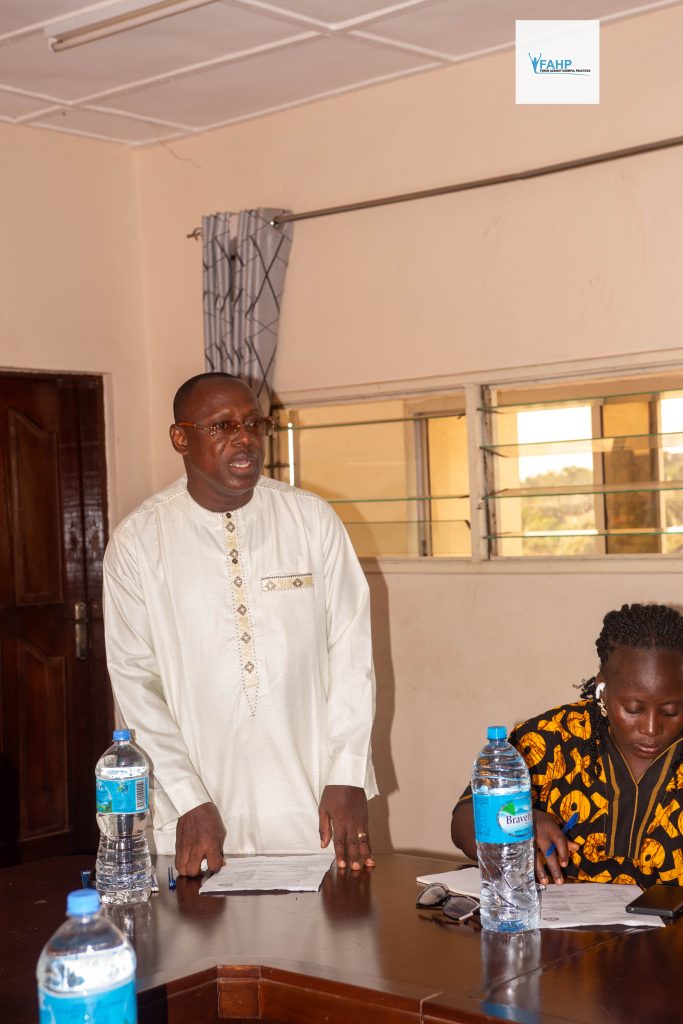
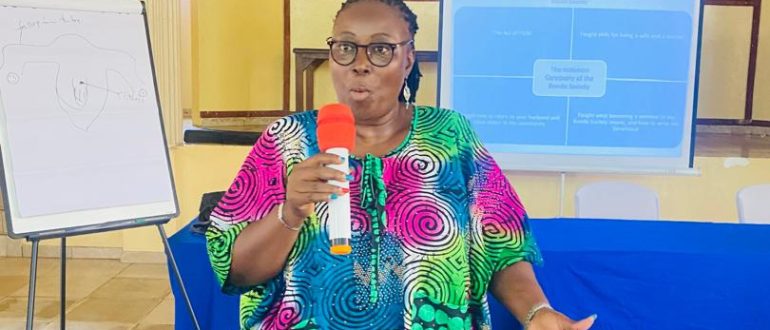
In her PowerPoint presentation, the Director of Gender in the Ministry of Gender and Children Affairs, Madam Goodie Sowonie spoke on the National Strategy for the reduction of FGM.

Given the reasons for the national strategy, she said the strategy focuses on a coherent FGC method for abandonment to have a clear vision and approach on how to reduce FGM. The strategy, according to her, will bring together government, civil society and development partners to fight off FGM or minimize it.

The strategy enhances coordination, accountability and implementation of evidence based interventions for FGM reduction. She said the vision of the strategy is to ensure that Sierra Leone is free from FGM, stating that the goal is to reduce the prevalence of FGM by 20%.

The Chairperson of FAHP, Madam Rugiatu Neneh Turay, who led the discussion and action point on the National FGM Reduction Strategy said the focus of the strategy is meant to open up a wider awareness raising campaign on the reduction of FGM practice in communities. Turay said Sierra Leone remains the highest infant mortality rate country in the world.

Rugiatu Turay said because there are no specific laws against FGM in Sierra Leone (apart from the Child Rights Act which is sometimes invoked), and as FAHP education is therefore key to changing mindsets. She stated that education helps women build their self-esteem to challenge issues and to question old traditions.

With education, girls will have the opportunity to make informed decisions.

She revealed that men need to change their perceptions about uncut girls and culture, adding that they need to be engaged so that they can accept their girls, sisters, to grow healthy. In most cases, she said women put pressure to have their daughters cut because they believe it’s the only way their children will find a husband.

She pointed out that FGM is seen as a way to satisfy the desire of men.

The Forum Against Harmful Practices has emerged as a pivotal platform in the ongoing fight against female genital mutilation (FGM), recognizing the contributions of women who have tirelessly advocated for its eradication. The awards presented by this forum to exceptional women like Dr Aisha Fofana-Ibrahim and UN Women , serve not only to honor these individuals but also to raise awareness about FGM and its detrimental impact on women’s health and rights. By spotlighting their efforts, the forum emphasizes the need for collective action against harmful practices that violate fundamental human rights.

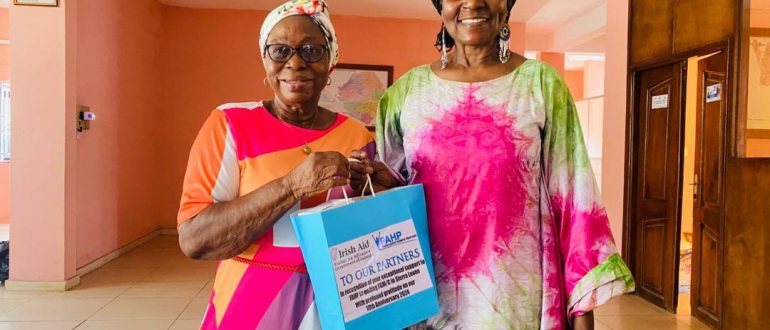
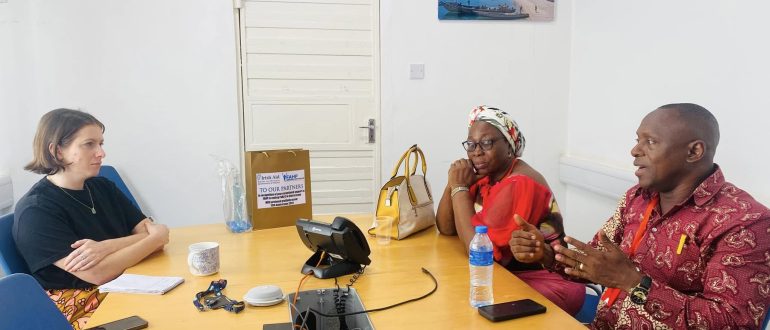
The Forum Against Harmful Practices (FAHP) visited the Foreign, Commonwealth & Development Office (FCDO) today to present a gift of appreciation for the support received in the ongoing efforts to promote women’s rights. This gesture underscores the importance of collaborative partnerships in addressing issues that affect women and girls in Sierra Leone.

The recognition of FCDO’s contributions signifies a collective commitment to address sexual gender base violence through advocacy and programmatic interventions.

FAHP’s visit to FCDO represents more than a simple act of appreciation; it embodies a strategic alliance crucial for advancing initiatives against gender based violence. As both entities work towards fostering legal reforms and empowering affected communities, this partnership exemplifies how collaborative efforts can lead to meaningful change in combating gender-based injustices.

As we conclude the 16 Days of Activism and commemorate Human Rights Day, it is imperative to reflect on the need for sustained efforts to protect the rights of women and girls in Sierra Leone. The campaign, which spans from November 25 to December 10, serves as a critical reminder of the pervasive nature of gender-based violence (GBV) and its classification as a profound human rights violation.

#endFGMC#EndViolenceAgainstGirls#16DaysOfActivismAgainstGenderBasedViolence#FAHP

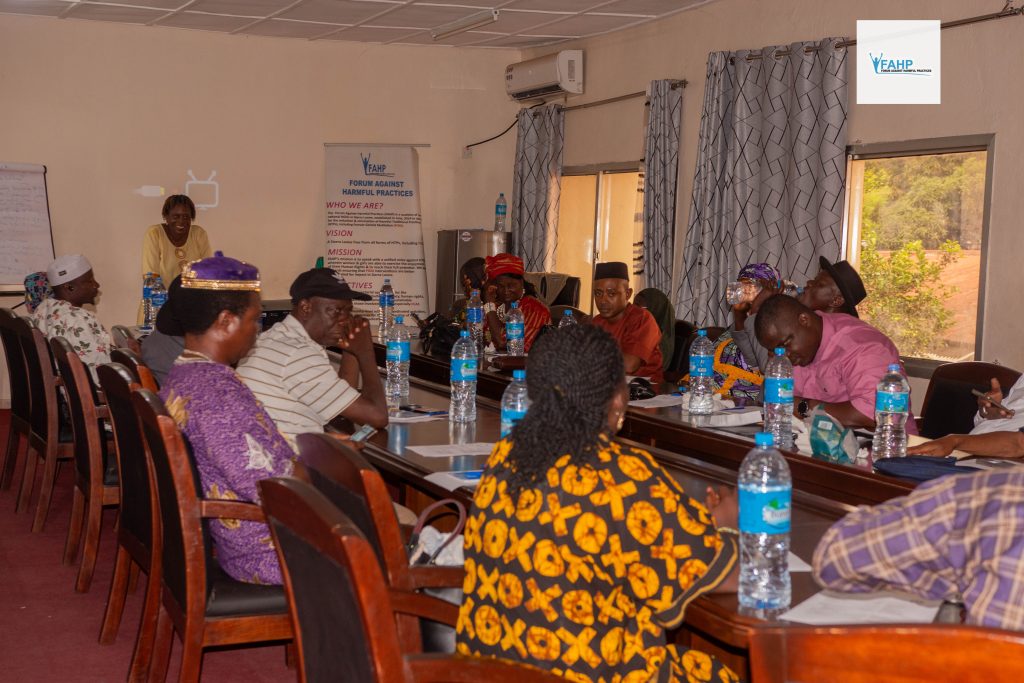
The Forum Against Harmful Practices celebrated a significant milestone, marking ten years of dedicated efforts to combat female genital mutilation (FGM). This anniversary event held at the New Brookfields Hotel was aptly themed ” A roadmap to meaningful conversation on the review and approval of the National Strategy for the Reduction of FGM/C in Sierra Leone.”

FAHP’s work over the past decade has focused on advocacy and awareness-raising initiatives aimed at eliminating FGM/C across Sierra Leone. The event not only celebrated achievements but also highlighted the ongoing commitment required to address this deeply entrenched practice like the approval of the National Strategy for. Dignitaries of line ministries who were in attendance gave their solemn support and assured FAHP that the document will be addressed.

During the celebration, the Forum Against Harmful Practices recognized and awarded its donors Purposeful Ireland in Sierra Leone UNFPA Sierra Leone etc. and partners whose contributions have been instrumental in advancing its mission. These acknowledgments serve as a testament to the collaborative nature of combating FGM, emphasizing that success is often contingent upon strong partnerships between various stakeholders. By honoring these supporters, the forum underscored the importance of continued collaboration and financial backing in order to sustain momentum against harmful practices.

#endFGMC#FAHP@10 #EndViolenceAgainstGirls

By Ragan M. Conteh

The remarkable anniversary marks 10 years of relentless fight to end all forms of harmful traditional practices including gender based violence in the country.

Making her statement on the ceremony, the Chairperson of the Forum Against Harmful Practices (FAHP), Madam Rugiatu Neneh Turay traced back the organization’s history, “I underwent female genital mutilaion (DGM) when I was eleven years and I know how it hurts me because I had to sleep nights and nights of severe pains with no showers. On the third day when it was time to have our first bath, the Soweis examined me and declared that the mutilation was not well performed and that they needed to remove the remaining clitoris that was left with me.”

Madam Turay was speaking on Thursday 5th October 2024 during a national high profile policy engagement. The engagement was held at the Brookfields Hotel in Freetown.

Madam Turay continued: after being remutilated, this time around it was not only a physical torture but a psychological torture that left an everlasting scare in her  her memory. She revealed that almost all FAHP members are  survivors who have taken the venture to speak with one voice by ending FGM.

“We have never changed our objectives neither our mission nor vision. From its inception stage,FAHP vision is very clear which is to see Sierra Leone free from FGM,” she said. She stated other organizations had been  seeing FGM as a taboo topic to discuss in public.

The Chairperson said FAHP has made a lot of progress towards building the movement to end female genital mutilation by reaching out to areas where it is practiced.

She said in villages they have formed community ambassadors, school clubs of influence, change  makers, (Soweis) clubs, father and man’s club when paramount chief are also members.

Madam Turay stated that slave trade, cannibalism, human sacrifice amongst others were cultural practices that are unacceptable, adding that FGM cannot be an exception.

She stated that FGM violates every right a woman should enjoy and that, she added, other countries in Africa, Europe, Asia and America where FGM is practiced have passed laws to ban it.

“I attended a four days retreat on FGM with other ten countries in Kenya. Most have banned FGM except my country.

“I listened alternatively as each and every participant shared their experiences in the field and how much challenges they faced even with the laws. When it was my turn to speak, the moderator said, can we listen  to Rugiatu Turay from Sierra Leone where there is no law banning FGM but numbers are decreasing. We must learn from her to know what they are doing differently that is making the change and decreasing the numbers in their country,” she said.

Rugiatu stated that her answer was simple, they are following a national strategy that was developed by the Sierra Leone Government which was never approved by the same government.

She revealed that as Anti FGM campaigners mostly survivors believe they have a responsibility first for their people to understand that FGM practice is wrong and dangerous not only to women but for entire community where it is practiced.

She said they have to make sure communities believe that they respect and honor the bondo culture as the only traditional space for women by creating an alternative rite of passage that is comumunity and cultural based.

The alternative rite named Neneh’s strategy is based on indigenous knowledge developed by the Amazonian Initiative Movement (AIM) and if fully accepted and implemented will not only uphold the beauty of Bondo culture but will eliminate the harmful practice and it’s a sustainable solution that will also address climate change, women Iradership and empowerment.

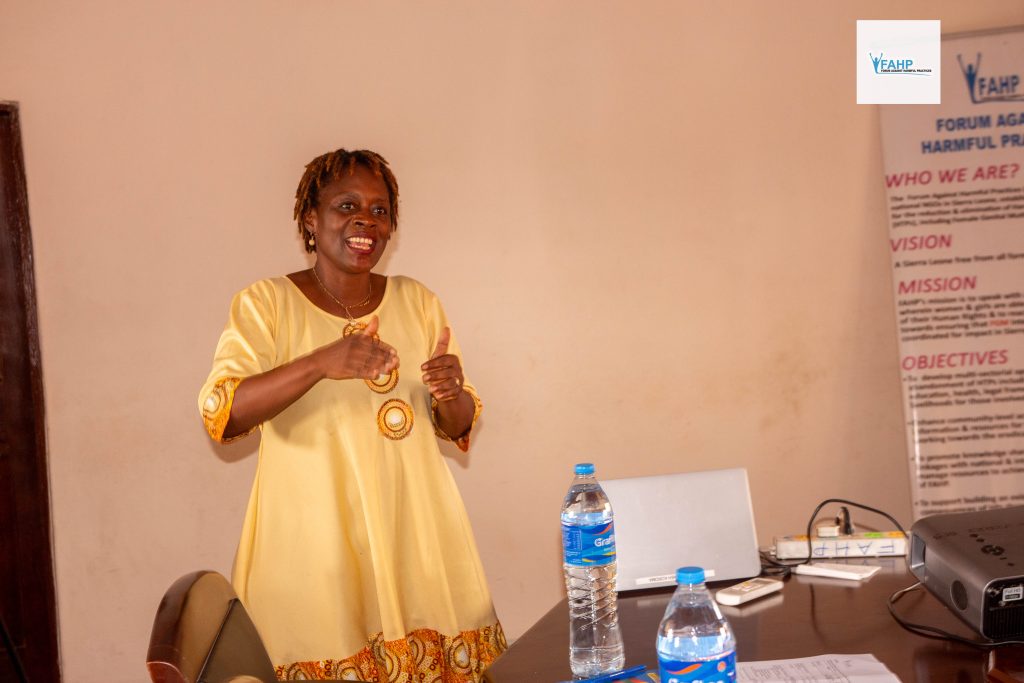
The Secretary of the Forum Against Harmful Practices, Madam Aminata Koroma, in her presentation, informed the gathering that FAHP was formally established on 26 June 2014 as a national coalition to respond to the increasing need for collaborative work among organisations working towards the reduction and ultimate eradication of Harmful Practices (HPs).

These practices, according to her, include but are not limited to child/forced marriage and Female Genital Mutilation/Cutting (FGM/C) which can contribute to reproductive health problems teenage pregnancy, maternal mortality and violence against Women.

Giving the vision of FAHP, Madam Koroma said the Coalition wants to see a “Sierra Leone free from all forms of harmful practices including FGM”.

She said the mission is to see FAHP speak with unified voice against Harmful Traditional Practices (HTPs), where women and girls are able to exercise the enjoyment of their Human Rights and to reach their full potential. “We work towards ensuring that FGM interventions are better coordinated for impact in Sierra Leone,” Madam Koroma said.